Jungle Stone Display Font for Handmade Creators
If you’ve ever spent ten minutes tweaking kerning on a birthday invitation just to get that joyful, hand-drawn energy right—you’ll understand why Jungle Stone feels like finding the perfect brushstroke in your design toolkit. It’s not just another playful display font. It’s a warm, bouncy, intentionally imperfect typeface that carries personality without sacrificing clarity—exactly what handmade sellers need when every label, sticker, or printable must balance charm with commercial function.
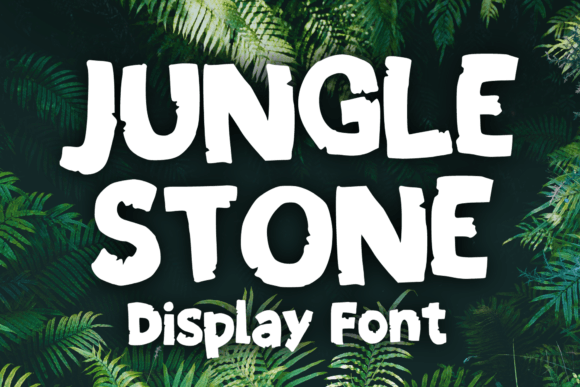
Jungle Stone lives in the sweet spot between whimsy and wearability. Its rounded forms, subtle unevenness, and generous x-height give it that friendly, approachable vibe—like chalk art on a rustic wooden sign or ink doodles in a boutique planner. But unlike some overly decorative fonts, Jungle Stone remains highly legible even at 24pt on a product tag or scaled down for a 1.5-inch sticker. That readability matters: whether you’re cutting vinyl for a Cricut mug wrap or printing 500 greeting cards for an Etsy shop launch, you need a display font that holds up in production—not just in mockups.
I use Jungle Stone across my own small stationery line, especially for pieces where emotional resonance drives the sale. Think: “Welcome Home” farmhouse wall prints (it softens the sentiment without going cutesy), botanical candle labels (paired with a clean sans serif for ingredient lists), and summer birthday invitations where parents want something cheerful but not cartoonish. It works beautifully for names and short phrases—“Mama Bear,” “Little Explorer,” “Wild & Free”—but isn’t built for body text. That’s intentional. As a display font, Jungle Stone shines brightest when it anchors attention, not fills space.
For physical product makers, Jungle Stone delivers real versatility. On kraft paper gift tags? It adds tactile warmth. On glossy sticker sheets for planners? It pops with friendly contrast. On cotton tote bags screen-printed in two colors? Its bold weight and open counters keep edges crisp through multiple print runs. I’ve used it for seasonal packaging too—think Halloween treat bags (“Spooky Good!”) or holiday market tags (“Hand-Poured • Small Batch • Made With Love”)—where tone and brand voice matter as much as legibility.
Readability tips for crafters: Jungle Stone performs best at 28pt and above for cut files (Silhouette Studio and Cricut Design Space both handle its curves cleanly). For tiny stickers under 1 inch, stick to one- or two-word uses (“Yes!”, “Yay!”, “Hello”)—avoid tight tracking or all-caps settings unless you manually adjust spacing. When prepping SVG files for digital download shops, always outline the text before exporting; Jungle Stone’s organic flow benefits from vector precision in layered designs.
Font pairing is where Jungle Stone truly elevates your work. I often pair it with a neutral sans serif like Montserrat or Poppins for balance—Jungle Stone handles the personality, while the sans serif grounds the layout with clean hierarchy. For wedding stationery, try it with a delicate serif like Cormorant Garamond: Jungle Stone for the couple’s names, the serif for date and details. If you're designing digital printables—planner stickers, habit trackers, or quote cards—pair Jungle Stone headlines with a relaxed handwritten font for subheadings (just ensure both share similar x-heights to avoid visual tension).
What’s included matters just as much as how it looks. Jungle Stone comes in a single, well-hinted OTF file optimized for both Mac and Windows. It supports standard Latin characters and includes basic punctuation—perfect for English-language product labels, social media graphics, and printable templates. While it doesn’t include swashes or stylistic alternates, that simplicity is part of its strength: no toggling between versions mid-project, no licensing confusion over extended glyphs. What you see is what you get—and it’s consistently usable.
Licensing is non-negotiable for sellers. Jungle Stone is a commercial font, meaning you’re fully cleared to use it in physical products (t-shirts, mugs, stickers), digital downloads (PDF planners, Canva templates, SVG bundles), client work (invitations, shop branding), and even resale items like craft kits or printable subscription boxes. Just remember: you can’t resell the font file itself or claim it as your own design asset. That clarity saves time—and potential headaches—when scaling your shop.
One thing I appreciate as a full-time printable creator? Jungle Stone doesn’t demand extra labor to look good. No shadow layers needed. No stroke effects required. Its natural rhythm and spacing mean it reads clearly straight out of the box—whether you’re designing for Instagram story banners, Amazon product mockups, or a hand-lettered-style wedding welcome board. That efficiency adds up: more time refining color palettes, testing paper stocks, or writing better product descriptions instead of wrestling with finicky typography.
It’s also become my go-to for rebranding smaller artisan clients—especially those in wellness, botanical goods, or children’s products. Jungle Stone quietly communicates care and authenticity without leaning into clichés. A skincare brand using it for “Small-Batch Serums” feels grounded and human. A kids’ book illustrator using it for chapter titles gives off gentle confidence—not forced fun. That nuance is rare in display fonts, and it’s why Jungle Stone stays open in my design apps more than most.
At its core, Jungle Stone isn’t about trend-chasing. It’s about giving your handmade work a consistent, recognizable voice—one that customers associate with warmth, intention, and quiet craftsmanship. Whether you’re printing 10 custom tea labels or launching a full suite of digital party printables, this display font helps your products feel thoughtfully made, not mass-produced. And in today’s market? That distinction isn’t just nice to have—it’s what keeps buyers coming back.